
Inside MONOPOLY GO!: Success, Stickers, and Community Drama
A former MONOPOLY GO! player examines the game’s record-breaking success, sticker economy, Facebook trading groups, and community drama.
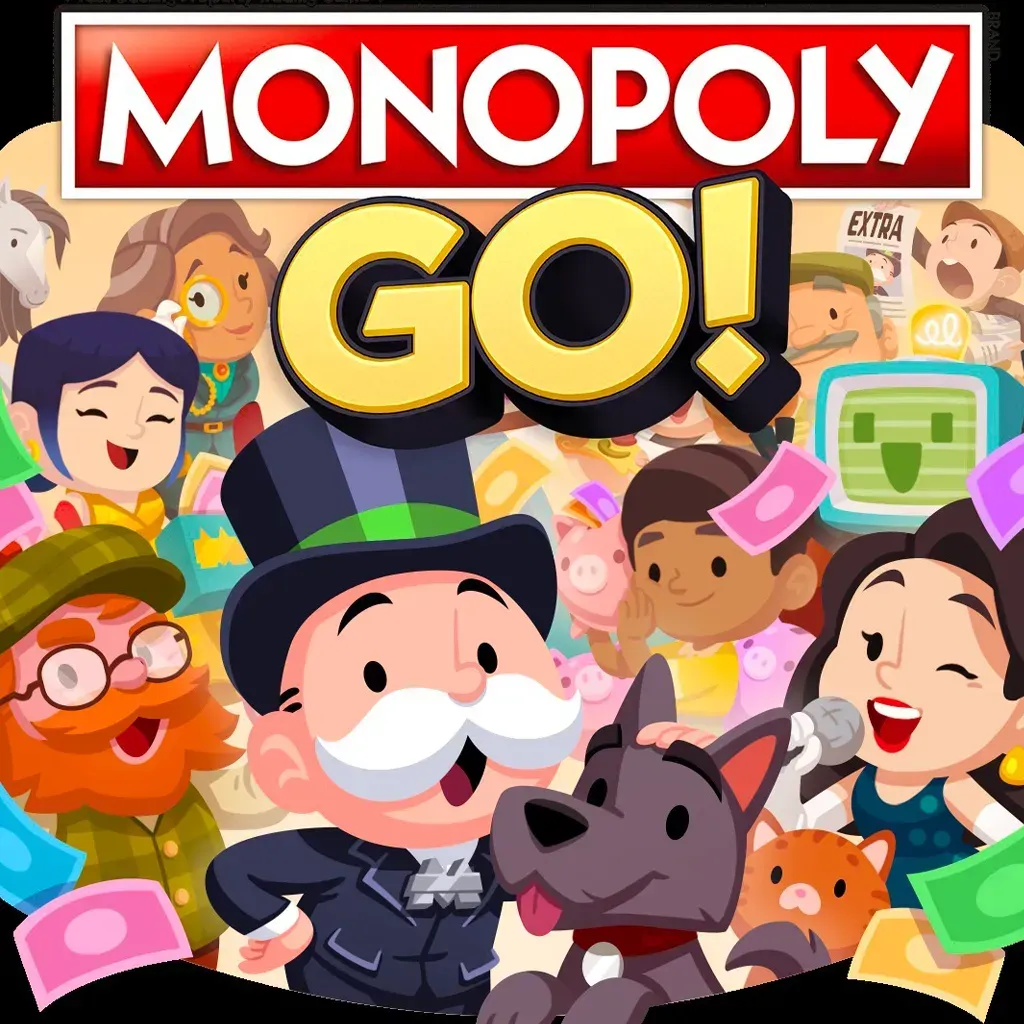
What began as a simple dice game became a record-breaking mobile hit—and a surprisingly intense social economy.
Retrospective note: This article is based on my time playing MONOPOLY GO! and participating in its sticker-trading community. I no longer play, so this is not a guide to the game’s current events, albums, or trading values.
When I first started playing MONOPOLY GO!, I wasn’t expecting it to become much more than a casual distraction.
Roll the dice. Collect money. Build a landmark. Move to the next board. Repeat.
The basic loop sounds almost too simple to support a global phenomenon, yet that simplicity is exactly what made the game so easy to pick up—and surprisingly difficult to put down.
Released by Scopely in April 2023, MONOPOLY GO! quickly became one of the biggest mobile releases in history. By 2025, it had surpassed an estimated $6 billion in lifetime in-app purchase revenue, reaching that milestone faster than any previous mobile game.
Its commercial success is undeniable. But revenue alone does not explain what it actually felt like to play. The more interesting story is how a familiar board game became a constantly updating mix of collecting, competition, limited-time rewards, and social pressure.
This Is Not Traditional Monopoly
Despite the branding, MONOPOLY GO! is not simply the original board game placed on a phone.
You are not sitting through a full match, negotiating property trades, or trying to bankrupt everyone around the table. Instead, the game uses familiar Monopoly characters, properties, tokens, railroads, and money to support a mobile progression system.
Players roll dice to travel around a board, collect cash, build and upgrade landmarks, attack other players, raid banks, complete tournaments, and unlock new themed locations.
The rules are easy to understand because most people already recognize the Monopoly world. The game then surrounds that familiarity with bright animations, frequent rewards, and a nearly constant sense of progress.
Even a short session usually gives you something: more money, a completed landmark, an event reward, a new sticker, or progress toward the next prize.
Why It Is So Difficult to Put Down
MONOPOLY GO! is exceptionally good at making the next reward feel close.
You might be one landmark away from completing a board, a few points away from the next tournament prize, or one sticker away from finishing a set. Limited dice rolls, timed events, daily bonuses, and rotating challenges create reasons to return throughout the day.
Scopely has credited the game’s fast reward loops, social systems, and event-driven updates as major reasons for its success. None of those elements feels particularly demanding on its own. Together, however, they ensure that there is almost always something unfinished.
That is where a casual mobile game can quietly begin feeling like a task. When the dice run out just before a reward, the game provides plenty of opportunities to wait, invite friends, or spend money to continue.
You can play without paying, but the pressure to keep playing—or pay to avoid stopping—is always present.
Stickers Became a Game Within the Game
Sticker collecting was one of the features that pulled me deeper into the community.
Each seasonal album is divided into sets, and completing those sets provides in-game rewards. Duplicate stickers can be traded with other players, turning what begins as a simple collection system into an entire player-created economy.
Stickers carry different star ratings, but those ratings do not create an official exchange rate. The community decides what a sticker is worth based on its rarity, demand, and how close the current album is to ending.
I preferred relatively straightforward trades: one five-star sticker for another five-star sticker, or sometimes two or three four-star stickers for a harder-to-find card. Other players asked for 20 or 30 stars’ worth of cards in return for a single five-star sticker.
Those offers were not necessarily cheating. There was no universally accepted value system, and every player could decline a trade. But inflated demands made what could have been a friendly exchange feel increasingly transactional.
The point where it became especially uncomfortable was seeing people ask for real money—sometimes $10 or $20—for a single digital sticker. Scopely’s terms state that virtual items have no real-world value and generally cannot be sold outside authorized game systems, so these offers were not simply another style of trading.
More than anything, they demonstrated how effectively the game convinced people that a temporary digital collectible had meaningful value.
The Best and Worst of the Community
The social side of MONOPOLY GO! could be genuinely enjoyable.
Facebook groups helped players find missing stickers, arrange trades, coordinate events, and occasionally give duplicates away without asking for anything in return. Partner events were more satisfying when everyone contributed, and completing a difficult album through a fair trade could feel like a shared victory.
Unfortunately, some parts of the community also became unnecessarily hostile.
Players regularly posted screenshots to call out other people for repeatedly attacking their landmarks, failing to contribute enough during partner events, or mishandling a sticker exchange. Scam warnings could be useful, particularly when they protected other players from the same behavior. Other posts seemed designed primarily to embarrass someone or encourage a pile-on.
Attacking landmarks and raiding banks are built into the game. It is understandable to become frustrated when one person repeatedly targets you, but treating every in-game attack as a personal betrayal takes a playful competitive mechanic far beyond what it needs to be.
Partner events and sticker trades created more legitimate reasons for disagreement because players were relying on each other. Even then, public shaming rarely improved the situation.
The community could transform a simple mobile game into a collaborative experience. It could also turn the game into another source of obligation, arguments, and unnecessary drama.
Free-to-Play Does Not Mean Free From Pressure
It is important to recognize that MONOPOLY GO! is free to download and can be played without purchasing anything. It is equally important to recognize that its monetization is not an incidental part of the experience.
Limited dice, timed events, escalating rewards, collectible albums, and frequent purchase offers all create urgency. Players are repeatedly shown what they could earn if they had just a few more rolls or finished one more set.
That does not mean everyone who spends money has been manipulated or that enjoying the game is somehow wrong. It means the game is exceptionally skilled at connecting spending with progress, completion, and social participation.
Its multibillion-dollar revenue is evidence of how effective that system has been.
Looking Back After Leaving the Game
I no longer play MONOPOLY GO!, but I understand why it became so successful.
It takes one of the world’s most recognizable board games and turns it into a stream of small, satisfying rewards. It gives players something to collect, something to complete, and something to discuss with other people. It also ensures that there is almost always another event, board, sticker, or prize waiting just out of reach.
At its best, it can be a fun routine shared with friends and family. At its worst, it can begin feeling like a second job—complete with deadlines, negotiations, group expectations, and coworkers who are angry that you did not contribute enough to the latest partner event.
MONOPOLY GO! did not become a phenomenon by perfectly recreating the original board game. It succeeded by placing a familiar Monopoly skin around an extremely effective mobile reward system and then making the community part of that system.
For a while, I was caught up in it too. Now that I am no longer playing, it is easier to see both why it was so appealing and why the experience eventually became more complicated than rolling a pair of digital dice.
Did sticker trading make MONOPOLY GO! more fun for you, or did it turn the game into something you had to manage?