
Mobile Gaming Changed Who Gets to Play—and What We Own
Mobile games made gaming easier to reach, but convenience comes with costs—from aggressive monetization to experiences that can disappear entirely.
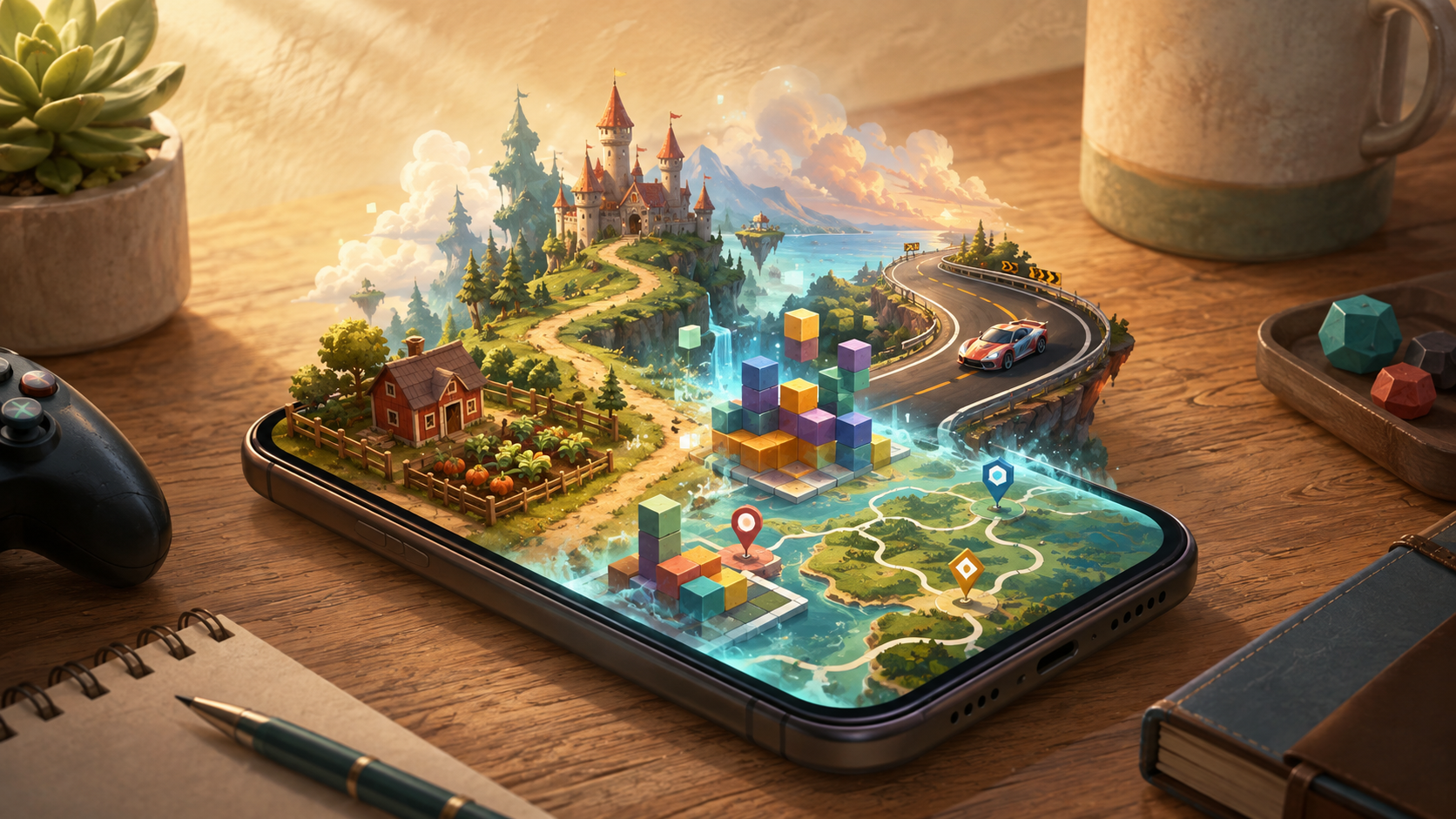
Our phones can hold everything from five-minute puzzles to sprawling role-playing games. That convenience changed where and how we play—but it also introduced new compromises.
The most important mobile gaming device is not necessarily the most powerful one. It is the one already in your pocket.
That may sound obvious now, but smartphones changed how games fit into everyday life. A console or gaming PC usually asks for a dedicated place, a block of free time, and at least a little preparation. A phone lets you solve a puzzle while waiting in line, check on a virtual town during lunch, or return to an adventure from the couch.
Mobile gaming did not simply shrink games to fit smaller screens. It expanded the number of places and moments in which playing became possible.
The Console Already in Our Pockets
For someone who already owns a suitable smartphone, mobile gaming can have a much lower barrier to entry than buying a dedicated gaming system. Downloading an app is easier than setting up a console, and many mobile games can be tried without paying anything upfront.
That convenience also makes mobile gaming remarkably flexible. A session might last five minutes or an entire evening. Some games are built around short daily tasks, while others offer stories and progression systems that can occupy players for months.
However, lower friction is not the same as universal accessibility. A capable phone can still be expensive. Large games consume storage, online features require dependable internet access, and extended play can drain a battery quickly. Accessibility options and control quality also vary considerably between games.
Mobile gaming opens doors, but not every player enters through the same one.
Mobile Gaming Is a Platform, Not a Genre
Mobile games are sometimes dismissed as little more than advertisements, timers, and repetitive tapping. Those games certainly exist, but they represent only part of a much larger platform.
Phones now host puzzle games, strategy titles, card games, simulations, role-playing adventures, visual novels, competitive shooters, and ports of games originally released on consoles or computers. Players can manage a farm in Stardew Valley, explore the enormous world of Genshin Impact, or spend a few quiet minutes completing a crossword.
Personal taste matters far more than age. Some players want a detailed role-playing game, while others prefer a relaxing puzzle or a town they can gradually decorate. Mobile gaming’s strength comes from giving all of those experiences space on the same device.
When Games Meet the Real World
Pokémon GO demonstrated that a mobile game could change a player’s relationship with the world around them. Instead of treating the phone as a self-contained screen, it turned parks, landmarks, and neighborhoods into parts of its game board.
Its combination of location-based play, collecting, raids, and community events helped establish a distinctive form of mobile gaming built around real-world movement. Although the game originated with Niantic, Pokémon GO moved into Scopely’s portfolio when the company completed its acquisition of Niantic’s games business in May 2025.
Location-based games are not equally convenient for everyone, especially players with mobility limitations or few nearby points of interest. Nevertheless, Pokémon GO showed how a phone could connect a digital experience to physical places and local communities in ways traditional systems rarely attempted.
More Power, Different Compromises
Modern smartphones are capable of running games that would once have seemed impossible on a pocket-sized device. Detailed 3D environments, online multiplayer, expansive soundtracks, and regular content updates are no longer unusual.
Raw capability does not always produce the most comfortable experience, though. Touchscreens work beautifully for some genres but can feel imprecise when a game was designed around physical buttons. Small displays can make text difficult to read, and demanding games may produce heat, rapid battery drain, or inconsistent performance.
Controller support can solve some of those problems, but adding accessories also begins to chip away at mobile gaming’s greatest advantage: simplicity.
The best mobile games understand the device they are running on. They use readable interfaces, sensible session lengths, and controls designed for touch rather than merely squeezing a console layout onto a smaller screen.
The Cost of “Free”
Free-to-play games have helped make mobile gaming approachable, but they have also shaped some of the platform’s most frustrating habits.
Energy systems, multiple currencies, limited-time events, advertisements, and randomized rewards can turn impatience or fear of missing out into spending. A game that costs nothing to download may eventually ask for far more than the price of a traditional release.
That does not make every free-to-play game exploitative. Many can be enjoyed without spending, and ongoing purchases can support years of updates. The important distinction is whether a game respects the player’s time and makes its costs understandable.
Convenience loses some of its appeal when every screen feels designed to lead toward another purchase.
What Happens When a Mobile Game Disappears?
One of mobile gaming’s biggest weaknesses is how temporary its worlds can be.
After more than a decade of players building their own versions of Springfield, The Simpsons: Tapped Out went offline in January 2025. Harry Potter: Wizards Unite closed in January 2022, while Catan: World Explorers shut down during its limited rollout in 2021.
When a server-dependent game closes, players may lose access to years of progress, purchases, and memories. The app is not simply removed from a store; the experience itself can become impossible to revisit.
Animal Crossing: Pocket Camp followed a more encouraging path. Nintendo ended the original online service in November 2024 but released Pocket Camp Complete as a separate paid version shortly afterward. It is not a perfect solution to game preservation, but it demonstrates that ending a live service does not have to mean erasing the entire game.
Why Mobile Gaming Still Matters
The argument over whether mobile games are “real games” should have ended long ago. Mobile is simply another platform, with its own strengths, limitations, successes, and bad habits.
It has introduced new players to gaming, created communities around shared experiences, and made it possible to carry remarkably varied forms of entertainment almost anywhere. At the same time, accessibility must mean more than placing a download button in an app store. Cost, controls, connectivity, monetization, and long-term preservation all affect who can play and what remains available to them.
The smartphone did not replace consoles, computers, or handheld systems. It expanded the map of where gaming can exist.
The real magic of mobile gaming is not that it ensures we are never bored. It is that a game can meet us where we are—provided it respects our time, our money, and our ability to return to it.