
Building the LEGO Speed Champions Porsche 963 (76916)
A hands-on review of LEGO Porsche 963 set 76916, including its 280-piece build, sticker-heavy racing livery, eight-stud-wide design, and display value.
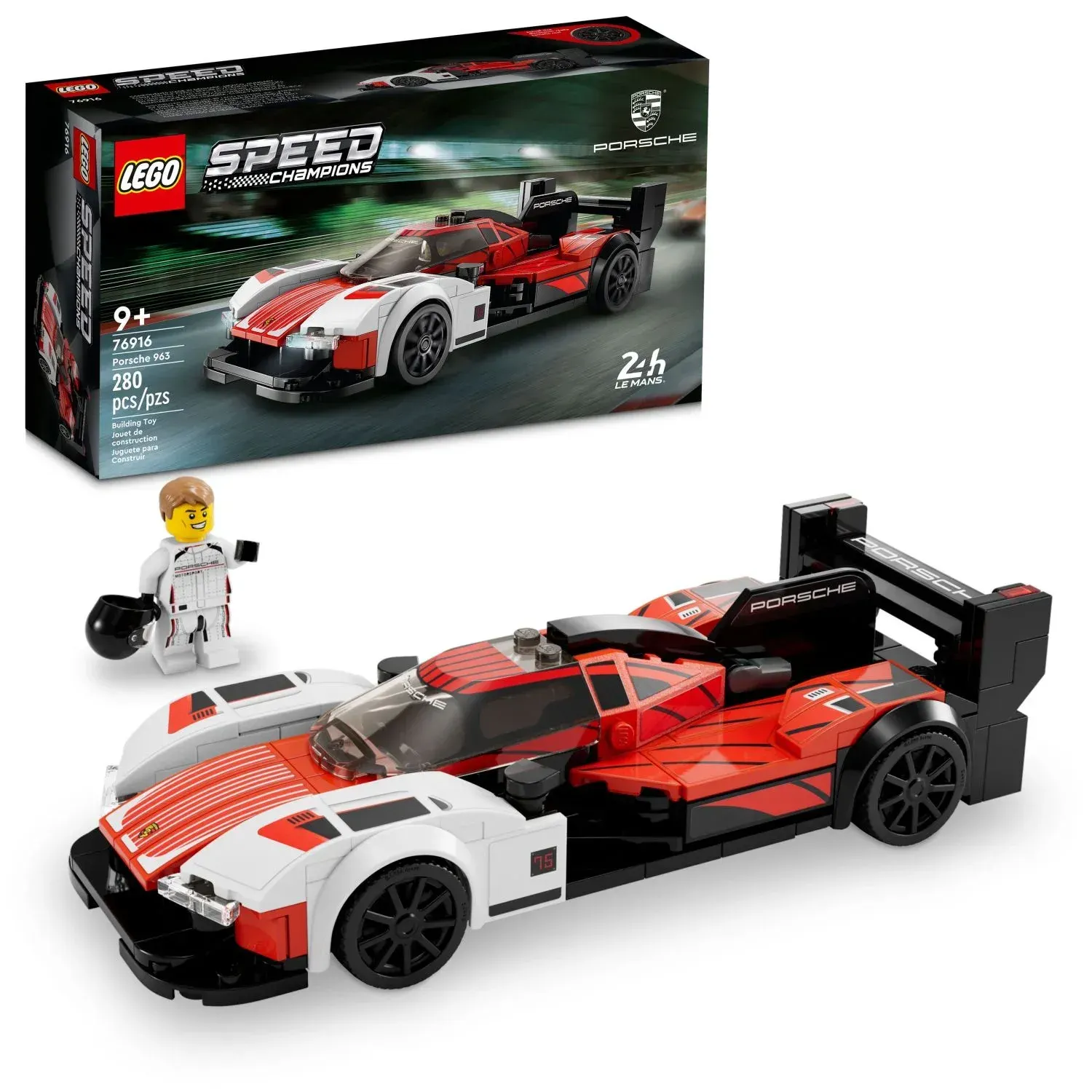
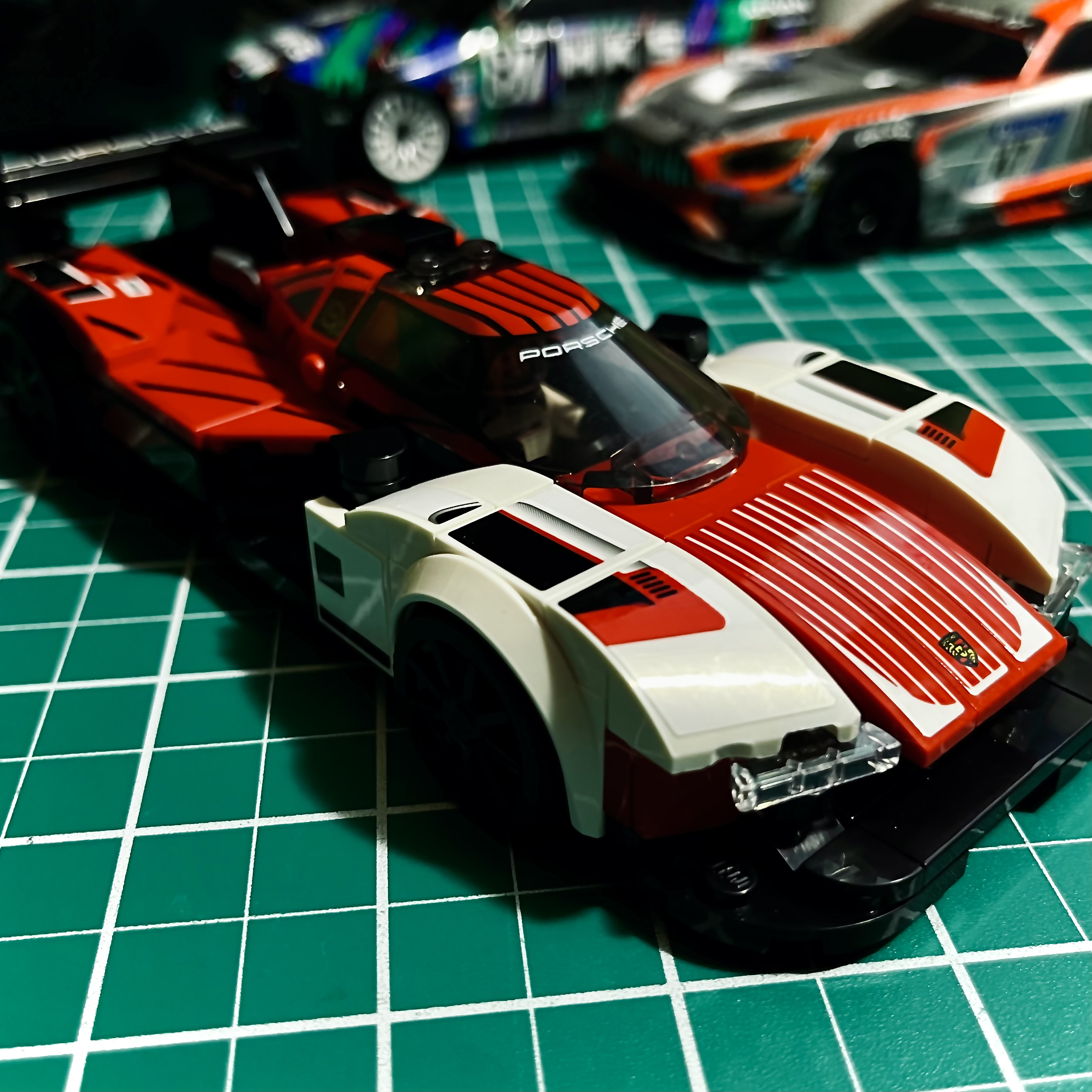
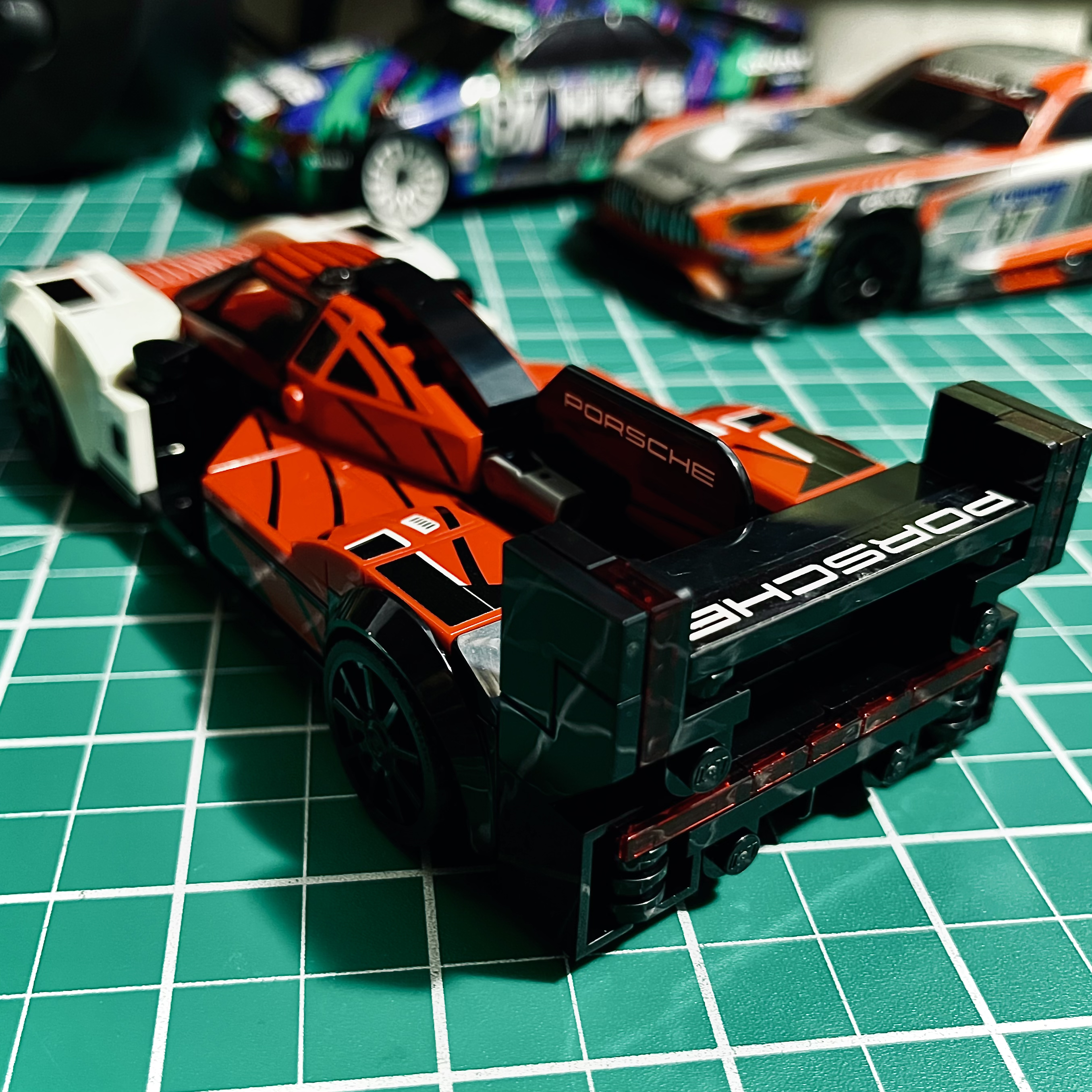
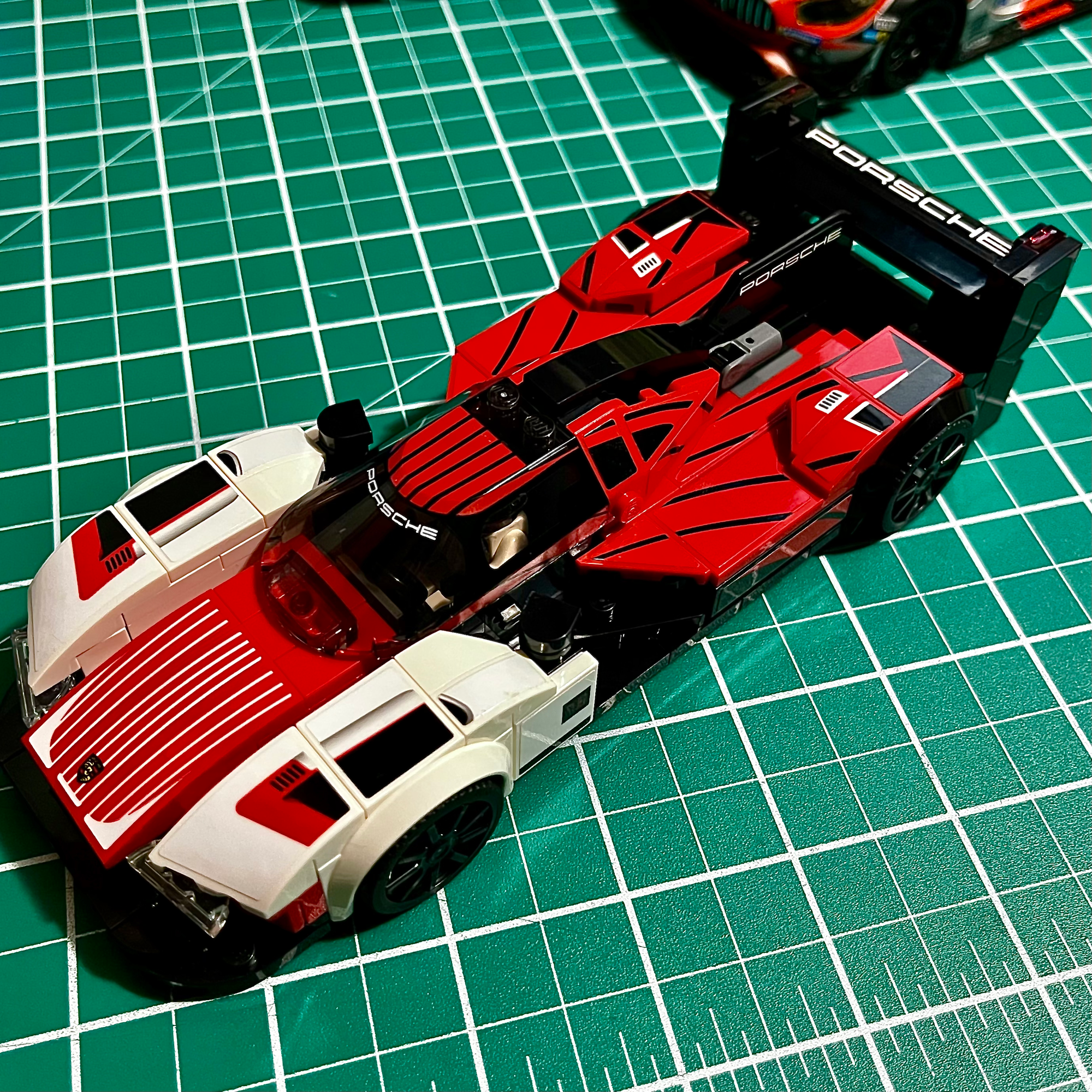
Finished Porsche 936
The 280-piece Speed Champions set turns Porsche’s modern endurance racer into a compact, surprisingly detailed display model—with quite a few stickers along the way.
Build at a glance
Set: LEGO Speed Champions Porsche 963
Set number: 76916
Pieces: 280
Minifigures: 1 driver
Original retail price: $24.99
Biggest strength: Excellent shaping at a compact scale
Biggest drawback: The racing livery relies heavily on stickers
I purchased this set myself after finding it at my local Walmart. This article is not sponsored.
I wasn’t planning to leave Walmart with another LEGO set, but the Porsche 963 immediately caught my attention.
The low profile, oversized rear wing, and red, white, and black racing livery make it stand out even among other LEGO Speed Champions cars. With only 280 pieces, it is small enough to be an approachable build but detailed enough to look like more than a basic toy car once finished.
After building it, I think the Porsche 963 is a strong example of what the Speed Champions line does well: translating a complicated real-world vehicle into a recognizable LEGO model without losing the fun of putting it together.
The Race Car Behind the LEGO Set
The Porsche 963 is a hybrid endurance race car developed for Porsche Penske Motorsport. It was created to compete in both the FIA World Endurance Championship and the IMSA WeatherTech SportsCar Championship, including major events such as the 24 Hours of Le Mans and the 24 Hours of Daytona.
Its name and design carry pieces of Porsche’s racing history forward. The real car’s shape and white, red, and black livery were influenced by the Porsche 956 and 962 racers of the 1980s.
That connection gives the LEGO model more significance than its size initially suggests. It is not simply a fictional racing car with Porsche branding—it represents a modern prototype designed to continue the company’s endurance-racing legacy.
What Comes in the Box?
The set contains 280 pieces divided between two numbered bags, along with an instruction booklet, a sticker sheet, and one Porsche driver minifigure.
The driver comes with a racing suit and helmet and fits inside the completed cockpit. It is a small addition, but it helps the set work as both a display model and something that can still be picked up and played with.
The two-bag structure keeps the build easy to follow without making it feel overly simplified. This is not a large or time-consuming project, but there is enough variety in the construction to keep the process interesting.
Building the Porsche 963
The Porsche 963 uses the eight-stud-wide format found in modern Speed Champions sets. That extra width gives the designers enough room to recreate the car’s low nose, prominent wheel arches, narrow cockpit, center fin, and large rear wing.
Those proportions are important because the real 963 has a shape that would be difficult to communicate at a smaller scale. The eight-stud-wide design allows the LEGO version to look appropriately low and wide without becoming too large for a shelf.
The most satisfying part of the build was watching that racing silhouette gradually take shape. The model begins as a fairly ordinary LEGO chassis, but the angled pieces and layered bodywork slowly create the curves and aerodynamic surfaces that make the finished car recognizable.
It is still clearly a LEGO interpretation rather than a perfect scale replica, but the balance works. The model captures the character of the real car while retaining the charm of a compact brick-built vehicle.
About All Those Stickers
The largest drawback is the number of stickers.
Much of the Porsche’s detailed racing livery depends on them, so careful placement makes a significant difference in how the finished car looks. The stickers add sponsor markings, striping, headlights, and other details that would be difficult to reproduce with bricks alone at this scale.
I used tweezers to position them, which made the process much easier and helped prevent crooked edges. Anyone who regularly builds sticker-heavy LEGO sets should consider keeping a small pair nearby.
The stickers look good once applied, but this may not be the ideal set for builders who strongly prefer printed pieces. A few additional printed elements would have made the experience feel more polished, especially because the livery is such an important part of the model’s identity.
The Finished Model
Once completed, the Porsche measures approximately 6.5 inches long and 2.5 inches wide. It has enough presence to stand out on display without requiring much shelf space.
The red, white, and black color scheme is especially effective, and the rear wing and center fin give the car an unmistakable endurance-racing profile. Small details such as the low cockpit and pronounced wheel arches help the model remain recognizable from multiple angles.
The completed car also feels sturdy enough to handle being moved around. It works as a display piece, but it does not feel so fragile that it has to remain untouched once it reaches the shelf.
Is It Worth Adding to a Collection?
At its original $24.99 retail price, the Porsche 963 offered a good balance between build experience, display value, and recognizable design. LEGO now lists set 76916 as retired, so its current availability and price will depend on the retailer or secondary market.
I was fortunate to find mine locally at Walmart. At a reasonable retail or clearance price, it is an easy set to recommend to Porsche fans, endurance-racing enthusiasts, and anyone already collecting LEGO Speed Champions cars.
The value becomes more subjective if resale prices rise significantly. It is an enjoyable model, but its compact size and sticker-heavy design are worth keeping in mind before paying substantially more than its original price.
Final Thoughts
The LEGO Speed Champions Porsche 963 is a compact but convincing tribute to Porsche’s modern endurance racer.
Its eight-stud-wide proportions give the designers enough room to recreate the car’s distinctive shape, while the racing livery makes the finished model immediately stand out. The reliance on stickers is its biggest weakness, but a careful application—and a good pair of tweezers—produces an impressive result.
This is not the largest or most complicated LEGO car available, and it does not need to be. It provides an enjoyable build, looks excellent on display, and captures enough of the real Porsche 963 to satisfy both LEGO collectors and racing fans.
For 280 pieces, that is a successful finish.
Which LEGO Speed Champions car should I build next?